

We’re putting together the Ultimate Leech Guide with Landon Mayer and Phil Rowley. We break down when to use leeches, how to fish them, and why they work so consistently across different lakes.
This one goes deep into tactics, from leader setup to retrieve styles, along with a better understanding of how leeches actually behave in the water.
If you’ve ever wondered why a simple leech can outfish just about anything else in your box, this episode lays it all out.



Show Notes with Landon Mayer on the Ultimate Leech Guide
Leeches are one of the most consistent food sources in stillwater. They’re always available, easy for fish to catch, and they can imitate a wide range of prey.
But before we get deep into leech tactics, we kick things off with a great listener question on early-season water temps and where fish are holding.
Listener Question: Early Spring Water Temps and Finding Trout
Phil answers Cooper’s question about water temps and where to find fish early in the season.
The big number to remember is 50°F. That’s when hatches pick up, and fish start feeding more consistently. The sweet spot is around 50 to 65°F, where trout are active and eating.
Inflow areas are always worth checking. They bring oxygen, food, and structure, but they can also swing too cold or too warm depending on runoff.
Fish are also transitioning this time of year. After winter, they slide out of deeper water and move into the shallows where food becomes more available.
Landon Mayer on Stillwater Fishing
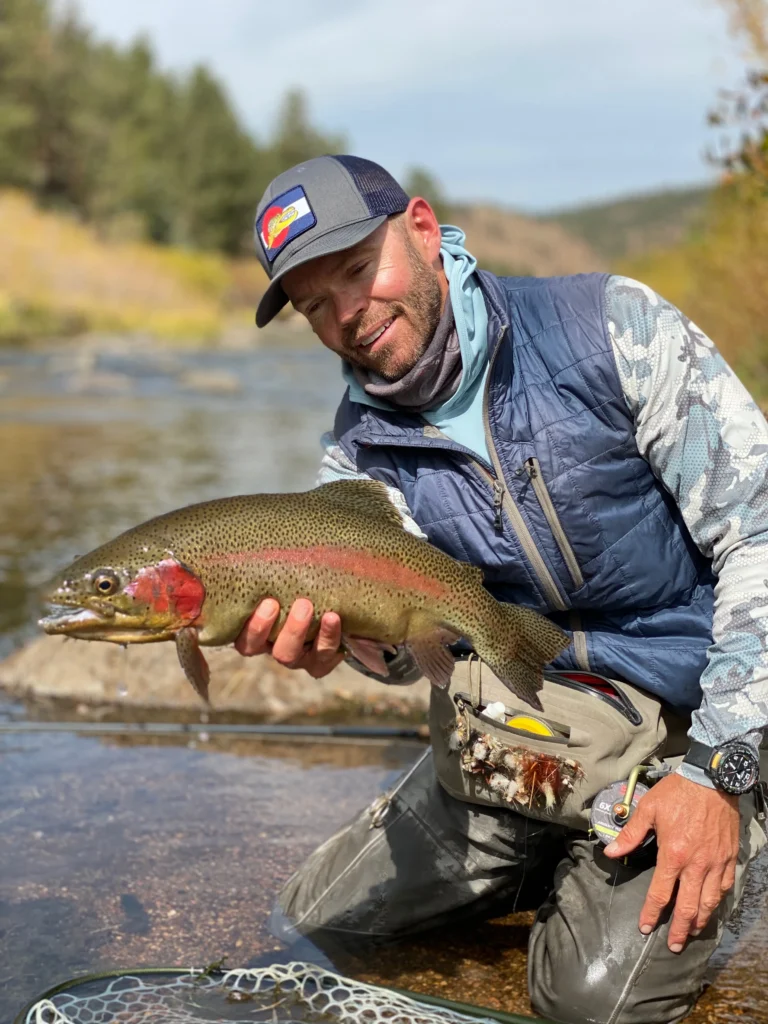
If you haven’t listened to the first episode with Phil Rowley and Landon Mayer, go check out Littoral Zone #10 – Shoreline Strategies and Tactics. Give that one a listen because it’s packed with tips on fishing lakes from shore.
Landon grew up in Colorado Springs and spent a lot of time fishing the South Platte and places like Spinney and Eleven Mile. That’s where he really got into stillwater fishing.
Fishing those waters, Landon said, one pattern kept showing up again and again.
Leeches.
First Leech Experiences
Landon and Phil kick off by talking about their first real experiences with leeches.
Landon describes seeing a large leech at Spinney moving just under the surface, fast and fluid, almost like a baitfish. That moment flipped a switch and showed him how active leeches really are.
That realization carried into fly design.
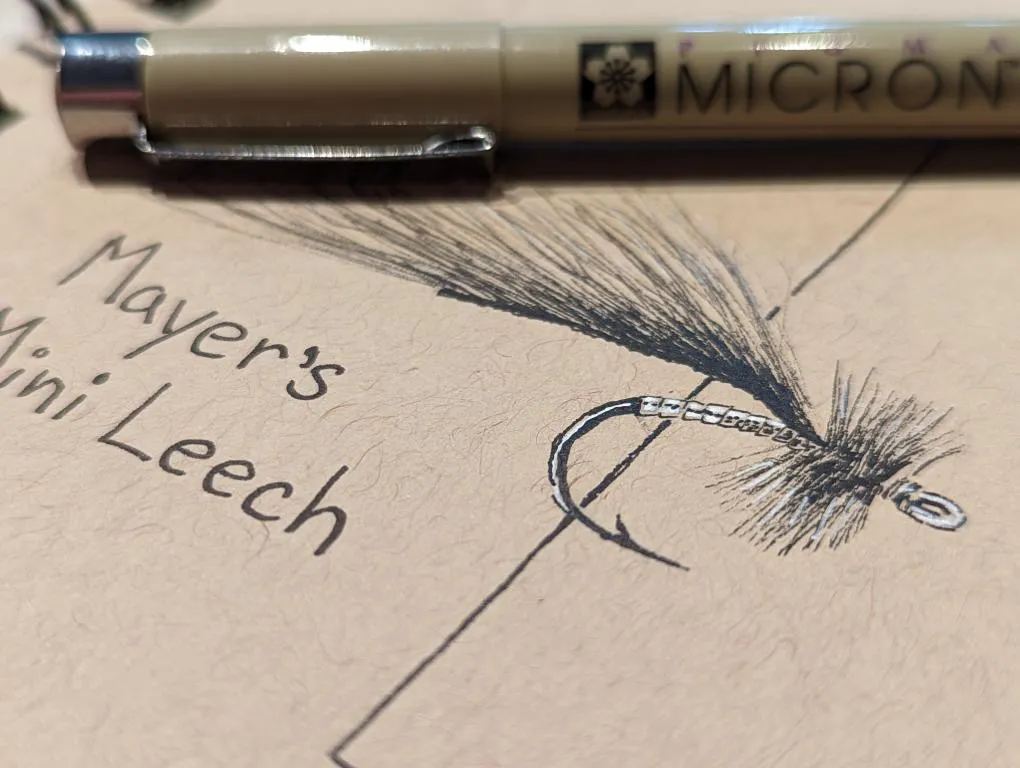
A broken slump buster led to what became the mini leech. The rabbit strip shifted forward, and suddenly the fly had a different movement profile that fish couldn’t resist
Phil had a slower start with leeches. He knew they mattered but struggled early on until one night in British Columbia when everything lined up and fish wouldn’t stop eating simple leech patterns.
Why Fish Key In on Leeches
Leeches are an easy target. They move slower than baitfish and don’t require much energy for fish to chase down.
At the same time, they’re a bigger meal.
That combination makes them efficient feeding opportunities for trout. As Landon puts it, it’s more bang for the buck. They’re also always present. Unlike insects that hatch and disappear, leeches live for years and remain available year-round.
Leeches can imitate:
- Baitfish
- Crayfish
- Nymphs
That versatility is a big reason they’re so effective
When to Fish Leeches
Leeches produce all season, but there are key windows where they really stand out:
- Right after ice-off
- Evening low-light periods
- Windy conditions with surface chop
- Deeper summer water
- Right after a hatch
This is also when you’ll run into those windows where fish are locked in on leeches. There may not be anything obvious happening on the surface, but fish are cruising and feeding steadily below.
When that happens, it can feel like a leech bite where nearly every good presentation gets attention. In those moments, focus less on changing flies and more on dialing in depth and staying in the zone.
If you want to understand more about how lakes work and where this all fits in, check out these episodes with Brian Chan:
- Littoral Zone #15 | Seasons of a Lake with Brian Chan and Phil Rowley
- Littoral Zone #14 – How Lakes Work with Brian Chan and Phil Rowley
- Littoral Zone #2 with Phil Rowley and Brian Chan – Stillwater Fly Fishing Tips and Tricks
Where to Fish Leeches
Start shallow, especially near drop-offs where fish move between zones. But don’t ignore deeper water. Leeches live in the substrate, so they’re just as relevant offshore, especially in summer.
Wind actually improves your chances. It creates cover and adds subtle movement to your fly.
Fishing options:
- Indicator rigs
- Dry dropper setups
- Stripping retrieves
There’s really no wrong place to fish a leech.
Fishing Leeches from Shore and Boat
From shore, versatility is key. Mix retrieves and cover water until you find what works. A simple lift-and-drop retrieve that kicks up sediment can trigger fish quickly.
From a boat, it’s about mobility. Drift to locate fish, then anchor when you find them. Wind helps push food and concentrate fish, making positioning even more important.
Rigging and Setup for Leeches
Landon prefers longer rods in the 10 to 11-foot range for better control and lifting power.
His setup includes:
- Winston Reach 10’ rod
- Bauer reel
- Weight-forward floating lines
In shallow water, Landon sticks with a dry dropper, usually around 3 to 6 feet, and he mentions that six feet is about his limit, so he can still cast and stay in control.
Once he needs to go deeper, he switches to an indicator setup, and if it gets really deep, he’ll either use a slip indicator or start counting it down. He’ll adjust in about 3-foot increments to figure out where fish are sitting in the column, high, middle, or low, and sometimes he’ll count it down in seconds, like 10 or 20, then start retrieving to dial it in.
Two-Fly “Double Trouble” Rig
When fish are aggressive, he runs a two-fly setup. A bigger fly leads, with an unweighted leech trailing behind. It can look like a baitfish chasing the leech. Fish might come over for the big fly, then eat the leech instead. He connects it with a loop knot to give the leech more movement.
Knots and Small Details
Landon changes knots based on how he’s fishing:
- Clinch knots for balanced flies
- Loop knots when stripping leeches for more action
- Micro swivels to reduce line twist
Phil’s Leech Setup
Phil focuses on keeping everything vertical under the indicator. That vertical presentation keeps the fly in the strike zone consistently.
Key elements:
- Level leader system
- Tippet rings
- 2–3 feet from swivel to fly
- Flies positioned 1–3 feet off bottom
He avoids tapered leaders because they create an arc, pulling the fly out of position Depth control is everything, and even small adjustments matter.
Leech Retrieves and Presentation
Landon gets into retrieves, and one of his go-to methods is what he calls the “Johnny Cash.”
- Short 6 to 12-inch strips, like strumming a guitar
- Done with a quick wrist flick, not long pulls
- Easy to go slow or fast depending on the day
- Can switch into a hand twist/finger retrieve from there
He says shorter movements make it easier for anglers to stay in control and adjust speed without overdoing it.
Phil adds that the hand twist helps keep the fly moving without going too fast, giving that ribbon-like swim with a lift and drop. It comes down to matching what leeches are doing. Sometimes fast, sometimes slow.
They also note that trout usually eat smaller leeches, not big ones.
Leech Fly Patterns.
For Landon, every fly needs to be realistic, durable, and versatile. That’s what gives him confidence to fish them anywhere, all year.
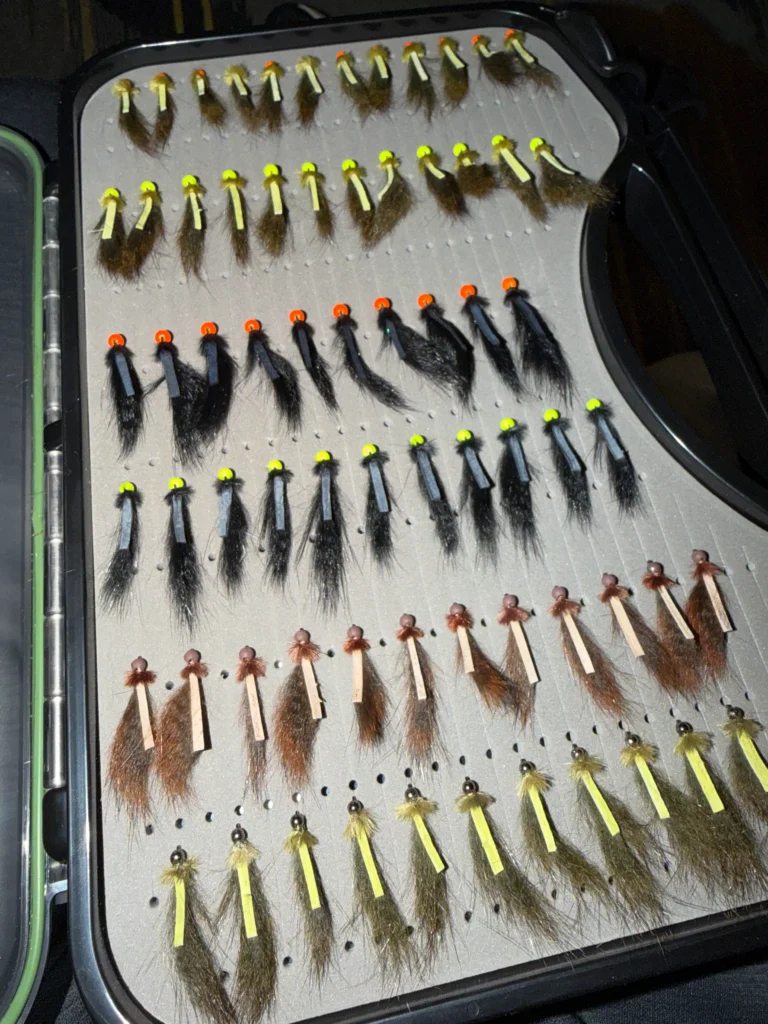
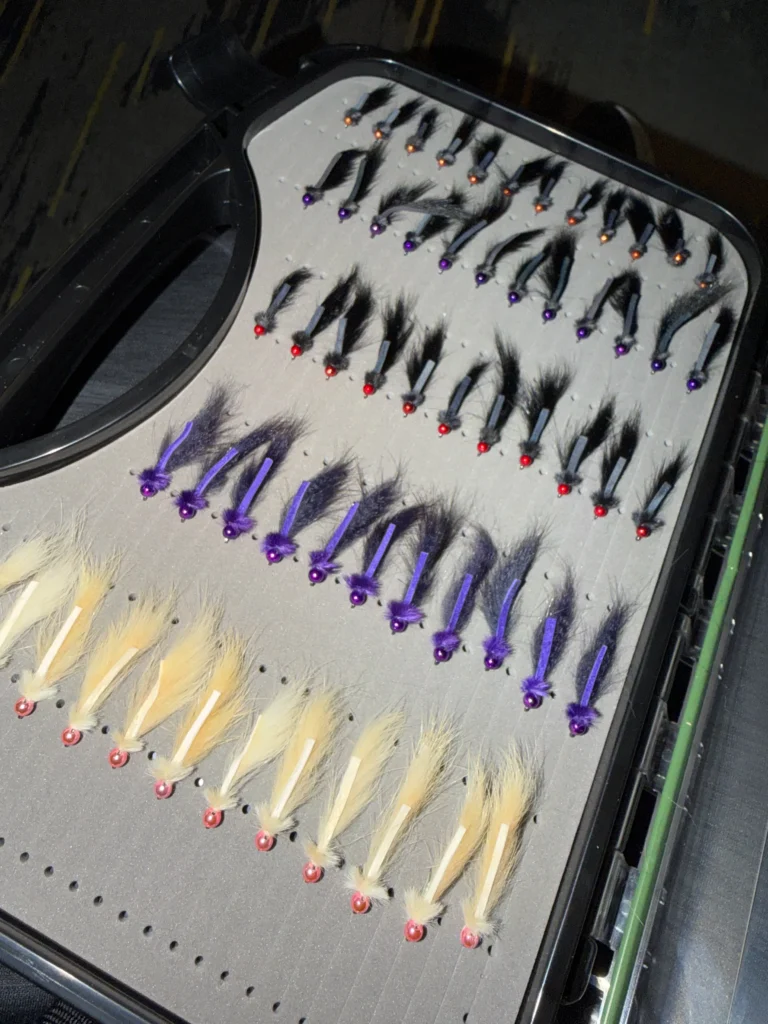
- His core patterns come from the Mini Leech family
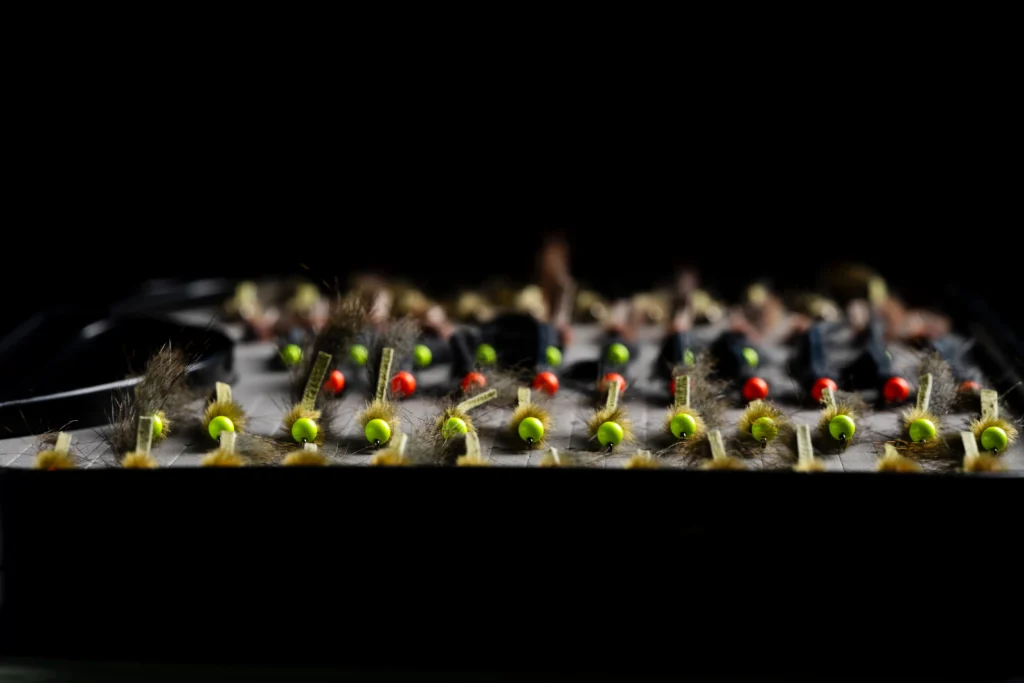
- Variations include unweighted, jig, and booby leeches
- Built to work in different depths and situations
Phil looks at a few key things when choosing flies:
- Size, profile, color, and behavior
- How the fly moves in the water matters just as much as how it looks
They both agree that most of the time, simple flies work best. And having a small box of confidence patterns is better than carrying hundreds of flies and guessing. Black, olive, and brown are staples, but adding bright beads or flash can trigger fish, especially in low light or dirty water.
At the end of it, it’s less about having everything and more about knowing what works and sticking with it.
Common Mistakes When Fishing Leeches
- Fishing too fast
Fast strips can work, but most days slower is better. Think steady movement or even just letting the fly drift. - Adding too much weight
You don’t always need to get down fast. In shallow water or weeds, a slower sink with an unweighted leech often works better. - Fishing too low
Instead of dragging the fly on the bottom, keep it just above it where the fish are feeding. - Sticking to one color
Have both a matching leech and an attractor leech. Fish can switch, so you need options. - Not adjusting your setup
If you don’t have multiple lines, you can still change sink rates using leader tip systems instead of buying a whole new setup.
Landon adds that you should always have both a Landon adds that you should always have both a matching leech and an attractor leech in your box. Don’t rely on just one.
They also mention not every situation needs heavy flies. Sometimes unweighted leeches are key, especially in shallow water or around weeds where you need a slow, controlled sink.
One last tip is line choice. If you don’t have multiple lines, you can use leader tip systems to change sink rates without buying a whole new setup.
Leech it Tour

Landon shares that he’s been on his Leech it Tour, traveling to shows and clubs and getting back out there after recovering from a back injury. He’s already a few stops in and plans to hit more throughout the year.
You can find the full tour and updates on his website and social channels, and he encourages people to come out and connect in person at events.
Connect with Landon Mayer
Follow Landon on Instagram @landonmayerflyfishing
Visit his website at LandonMayerFlyFishing.com
Sponsors and Podcast Updates
The Ultimate Leech Guide Resources Noted in the Show
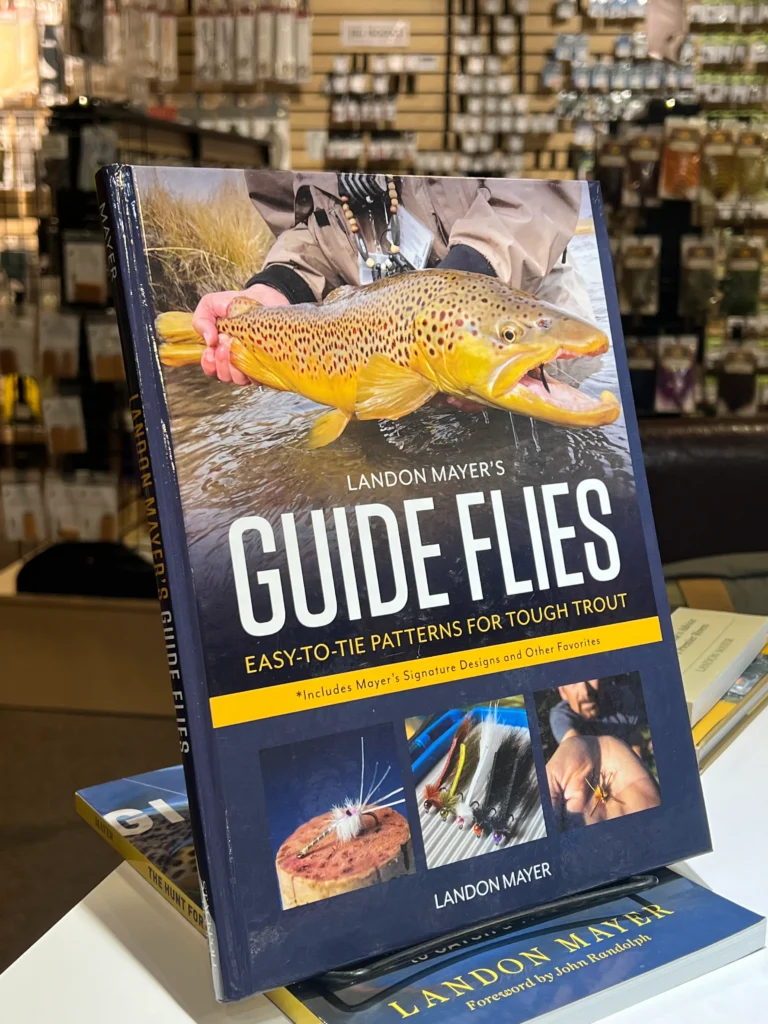
Here are the pattern recipes for Landon’s original Mini Leech and all of its variations from his Guide Flies Book.
Mayers Mini Leech
Hook: MFC Straight Eye Caddis & Chironomid Hook
Thread: Uni-Thread, 8/0, Black
Body: Crystal Flash, Black/Red
Wing: Micro Pine Squirrel Zonker, Black or Brown
Thorax: Ostrich Herl, Black or Brown
Mayers Mini Leech Jig
Hook: MFC Tactical Jig Hook (#12-#18)
Thread: Uni-Thread, 8/0, Black
Bead: Tungsten Slotted (2.3 MM-2.2MM), Black
Body: Crystal Flash, Black, Green or Root Beer
Wing: Micro Pine Squirrel or Mink Zonker, Black, Olive, or Brown
Collar: Ostrich Herl (Large), Black, Olive, or Brown
Mayers Mini Leech Jig Radiant
Hook: MFC Tactical Jig Hook (#12-#18)
Thread: UTC 70, White
Bead: Slotted Tungsten, Radiant Pink
Body: Crystal Flash, Pink
Wing: Micro Mink Zonker, White
Collar: Ostrich Herl (Large), White
Tying Note: Other favourite colour combinations for the Mini Leech Jig Radiant include: black wing/head and a purple bead, black wing/head and an orange bead, rust wing/brown head and a brown bead and an olive wing/head and an olive bead.
The Ultimate Leech Guide Videos Noted in the Show
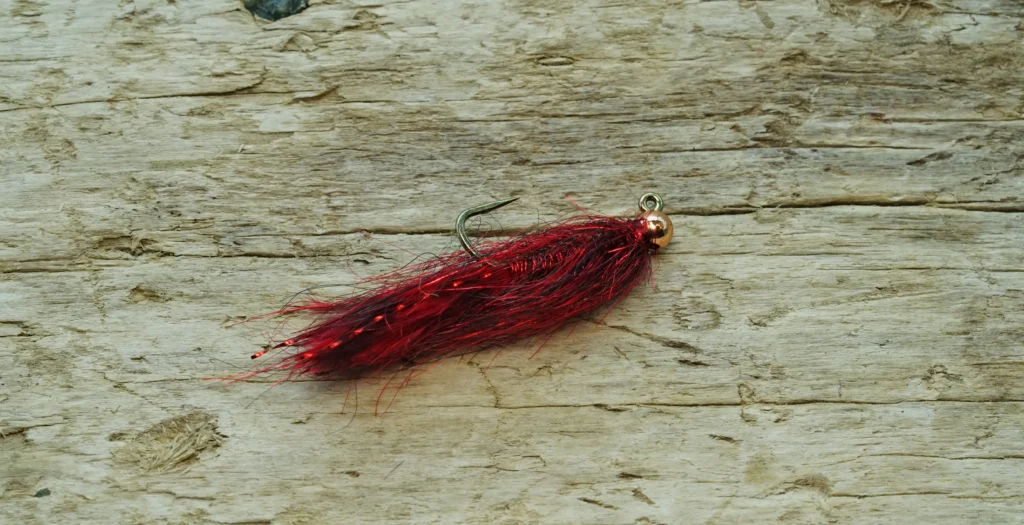
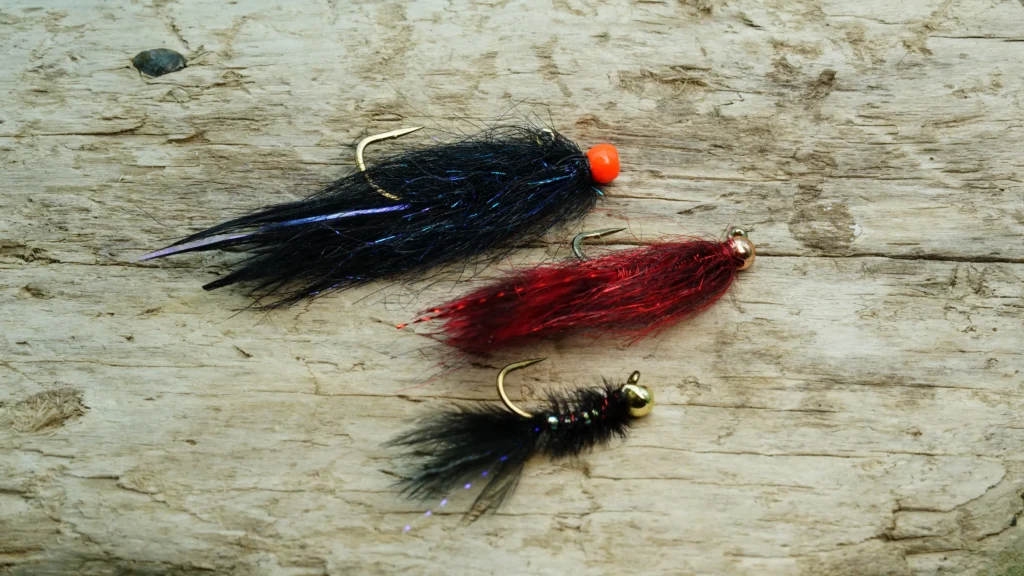
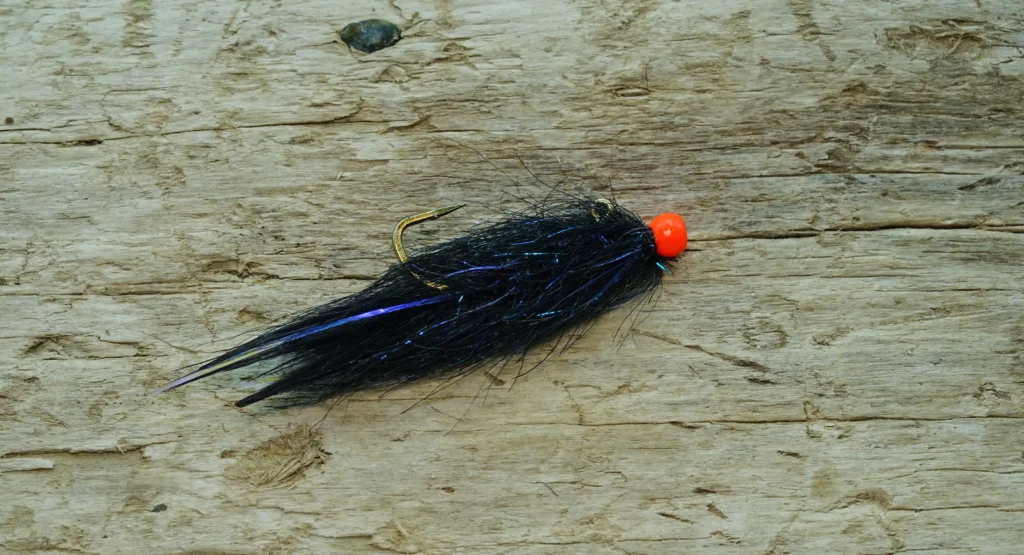
Here are the recipes for the leech pattern images provided:
- Balanced Leech (Bruised)
YouTube Video Link (Original Version)
YouTube Video Link (Updated Version)
Hook: Daiichi 4640, 4647 or 4699 #10
Thread: Semperfli Nano Silk, 50D, Black
Tail: Marabou, Black and Two Strands of Ice Blue Pearl Flashabou (#6904) Tied Along the Sides
Body: Arizona Simi Seal, Black/Blue
Bead: 1/8″ (3.2 MM) Tungsten, Gold, Fl. Orange, Fl. Chartreuse, or Fl. Pink
Extension: Sequin Pin - Baby Leech (Red)
YouTube Video Link
Hook: Daiichi 4640 or 4647 #12
Tail: MFC Schlappen Flue, Black/Maroon, Mixed with Two Strands of Crystal Flash, Red
Body: Arizona Simi Seal, Red/Black and Red Mixed in a 50/50 Ratio
Bead: 7/64 ” (2.8 MM) Slotted Tungsten or Tungsten Head Turner Bead, Gold - M & M Leech
YouTube Video Link
Hook: Daiichi 1120 #10
Thread: Semperfli Classic Waxed, 8/0 or 12/0, Black
Tail: Schlappen Flue, Black, Mixed with Two Strands of Crystal Flash, Red
Rib: Semperfli 1MM Wire, Silver
Body: Mirage Opal Mylar, Medium
Body Hackle: Ostrich Herl, Black
Bead:7/64 ” (2.8 MM) Tungsten, Gold