

In this episode, our stillwater guru, Phil Rowley, sits down with Chris Callanan from Outcast Sporting Gear to talk about inflatable watercraft for lakes.
They dig into float tubes, pontoon boats, frameless boats, anchoring systems, safety, maintenance, storage, and how to choose the right setup for your fishing style.
Chris also shares the history behind Outcast and how portable watercraft evolved from the old donut-style float tubes into today’s modern V-hull designs.


Show Notes with Chris Callanan on Inflatable Watercraft for Lakes
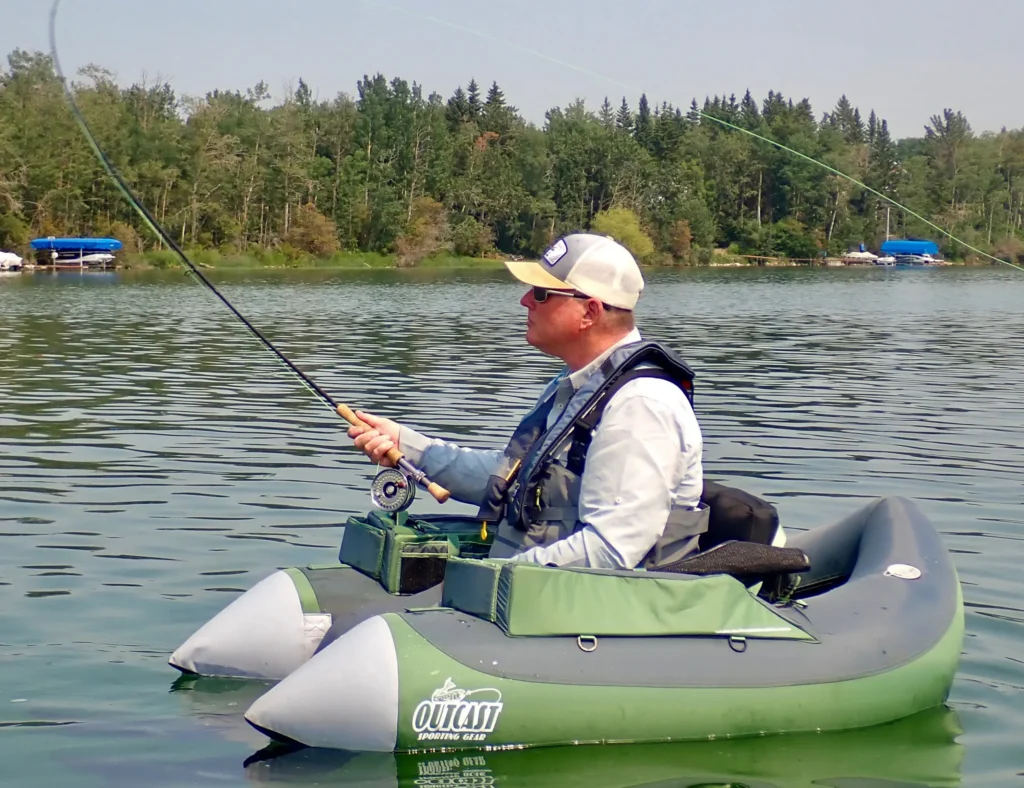
Fishing lakes from shore works sometimes, but not always. Weed beds, muddy banks, limited casting room, and access issues can all make things tough pretty quickly. That’s where inflatable watercraft for lakes really shine.
In this episode, Phil and Chris Callanan from Outcast Sporting Gear talk about:
- Float tubes vs. pontoon boats
- Safety tips on the water
- Anchoring and positioning your craft
- Maintenance and care
- Accessories and setup ideas
- When inflatables are actually the better option on the lake
Phil also explains why he still loves fishing from inflatable watercraft today, even with access to larger boats.
Listener Question: Loop Knots for Chironomids
Before getting into boats, Phil answers a question from Roger about using loop knots for chironomid fishing. Phil says he uses loop knots for almost all stillwater flies because they allow more natural movement in the water.
The only exceptions are dry flies and jig flies under indicators, where he prefers a clinch knot to help the fly sit properly. Otherwise, it’s “loop knots all the way.”
Chris Callanan’s Path to Outcast Sporting Gear
(4:43) Chris Callanan says he’s been with AIRE and Outcast for more than twenty years and now works as Director of Sales. The company has three divisions:
- AIRE Whitewater
- Outcast fishing
- AIRE environmental
He also talks about the company becoming employee-owned and how that helps keep good people around.
Before joining Outcast, Chris worked in publishing and advertising. Fishing and the outdoors were always part of his life, though. He guided in college, worked in a fly shop, and says he mostly chose Montana because he liked to fish and ski.
Access is Everything
(8:18) Phil says one of the biggest barriers to fly fishing lakes is that people feel intimidated by all the open water. A lot of anglers also think they need an expensive boat and trailer setup before they can really fish lakes properly.
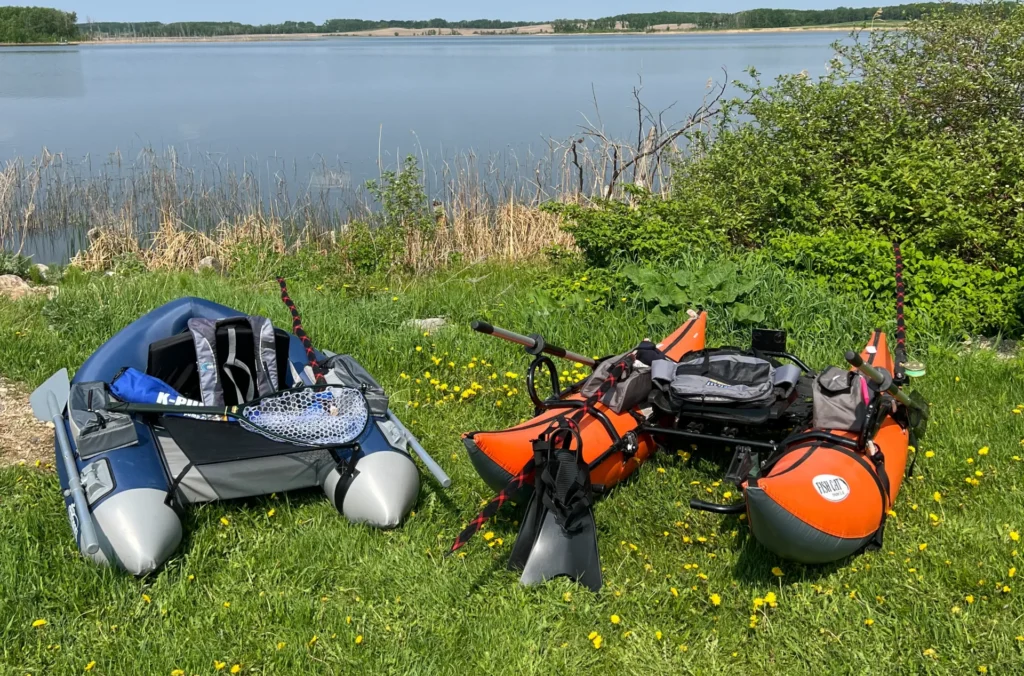
Chris says that’s exactly where inflatable watercraft for lakes come in. As he puts it, “access is everything.” These boats make it easier for anglers to get on the water without spending a fortune or needing a ton of space.
Some of the biggest advantages:
- Lower cost
- Easy transportation
- Minimal storage space
- Access to smaller lakes
- Easier portability for remote trips
From Old Donut Tubes to Modern Float Tubes
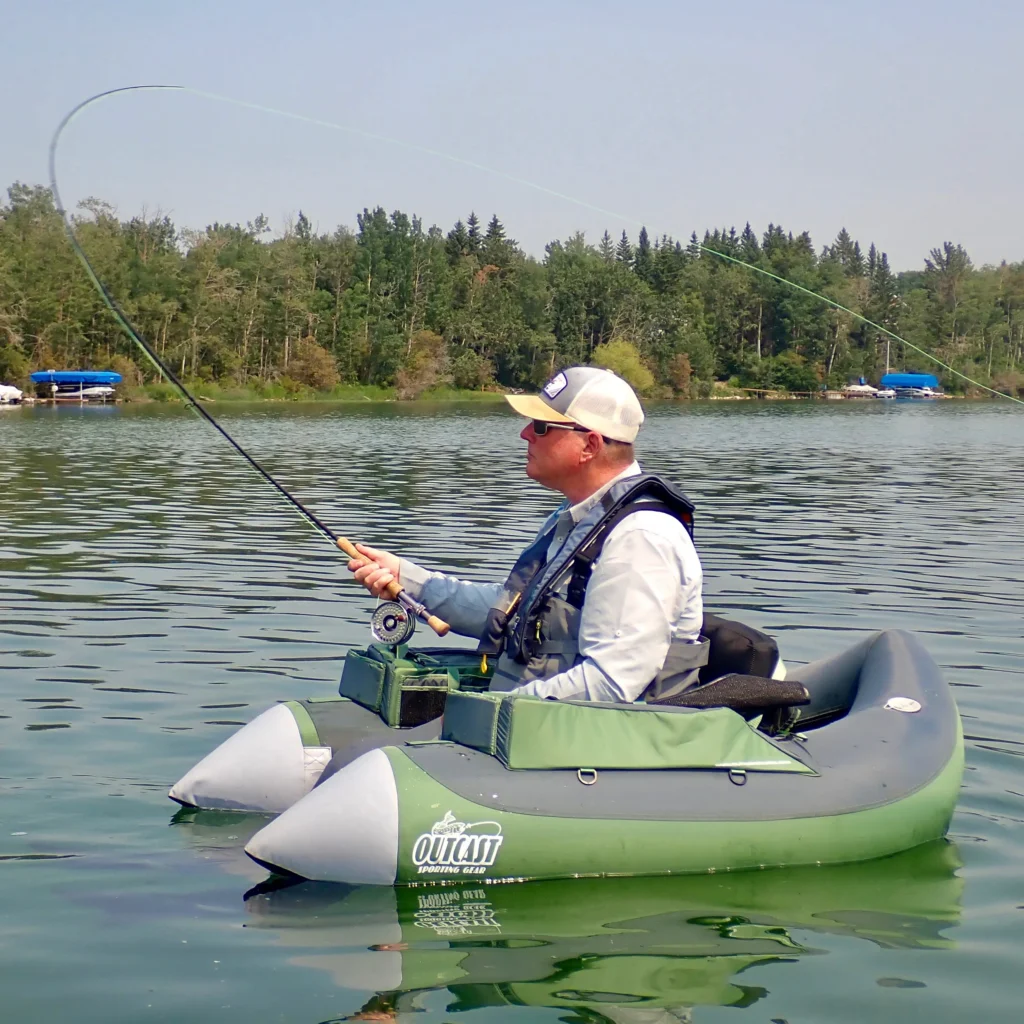
(13:37) Phil and Chris talk about how float tubes have changed over the years. The old versions were basically little donut-style tubes where anglers sat low in the water from the waist down.
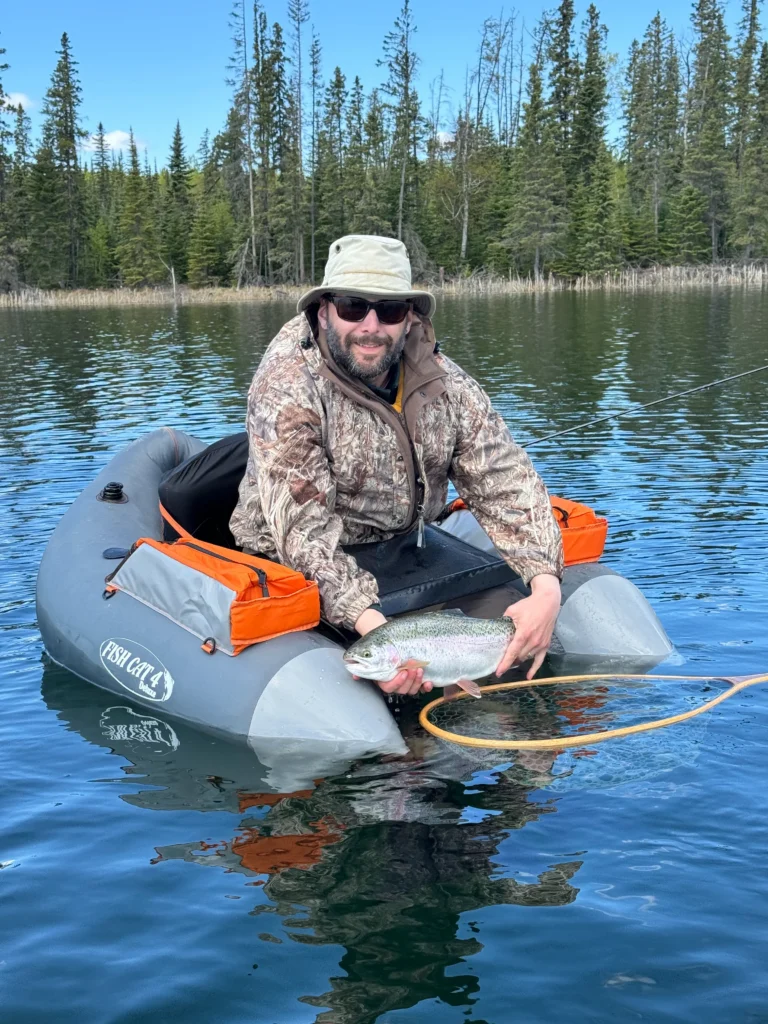
Chris explains how Outcast evolved from pontoon boats into today’s V-hull float tubes with raised seats, better visibility, and more comfort on the water. Phil says sitting higher helped anglers stay warmer and made it easier to see strike indicators in rough water.
They also walk through some of the different float tube models:
- Fish Cat 4 — standard foam seat and backrest
- Fish Cat 4 Deluxe — inflatable seat and backrest
- Fat Cat — larger design with better storage pockets
- Super Fat Cat — inflatable seat and upgraded pocket system
- Summit — lightweight backpackable tube built for alpine lakes
- Prowler — wider design made for bigger anglers
Float Tube Basics and Getting on the Water
(21:28) Phil and Chris talk about the little learning curve that comes with float tubes, especially back in the old donut-style days when anglers learned quickly not to walk forward in fins.
Chris says modern open-front float tubes make getting in and out much easier, and adding oars ended up being a huge upgrade, especially for dealing with wind and covering more water without kicking all day.
Phil also points listeners to Outcast’s YouTube channel for tips on anchoring, setup, and float tube safety.
Check out their video here: How to Safely Get in and Out of a Float Tube
Why Oars Changed Modern Float Tubes
(23:01) Chris says Outcast originally thought customers were crazy for wanting oars on float tubes. Then they tested them and quickly realized how useful they actually were.
Phil explains how he likes using oars for long moves across the lake and fins for fine positioning once he reaches productive water. They also get into some of the tradeoffs that come with float tubes.
- Storage space is limited on float tubes, especially for anglers who like carrying lots of gear
- Muddy lake launches can make getting in and out difficult
- Once anglers start wanting fish finders, anchors, rod holders, or motors, Chris says it usually makes more sense to move into a framed pontoon boat instead
- Modern float tubes have come a long way from the old truck inner tube days, with abrasion-resistant outer shells and urethane or vinyl bladders that are durable and easy to repair in the field
Pontoon Boats
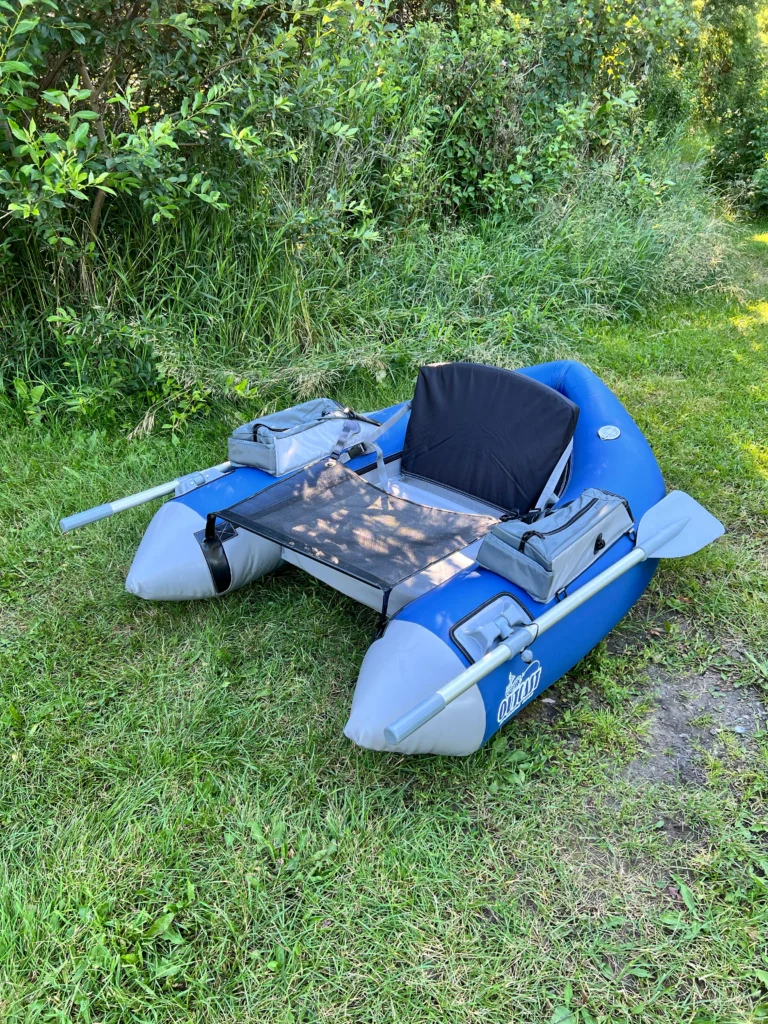
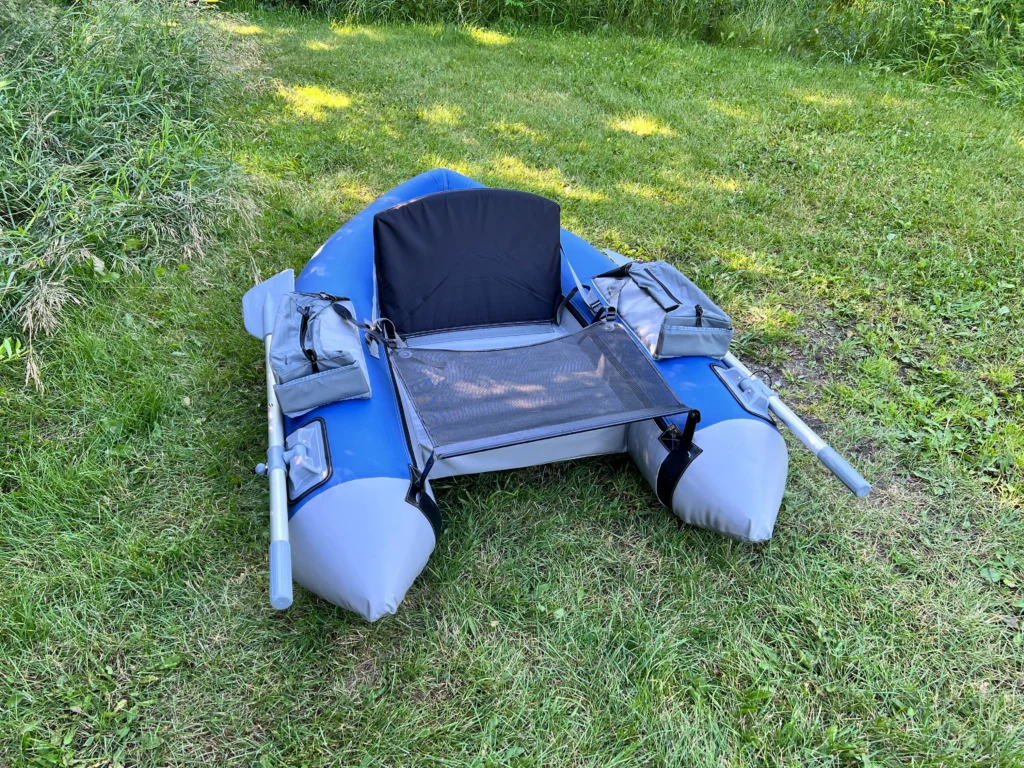
(34:02) Chris says pontoon boats are still one of the most versatile options because they work on both lakes and rivers. Most framed models use 9-foot pontoons, solid frames, and longer oars that can handle bigger water.
They also talk about the difference between framed and frameless pontoon boats:
- Framed pontoons let anglers add anchors, rod holders, depth finders, and extra storage
- Frameless models like the Stealth Pro are lighter, more compact, and easier to transport
- Chris says framed boats are the better choice for bigger rivers or anglers carrying more gear
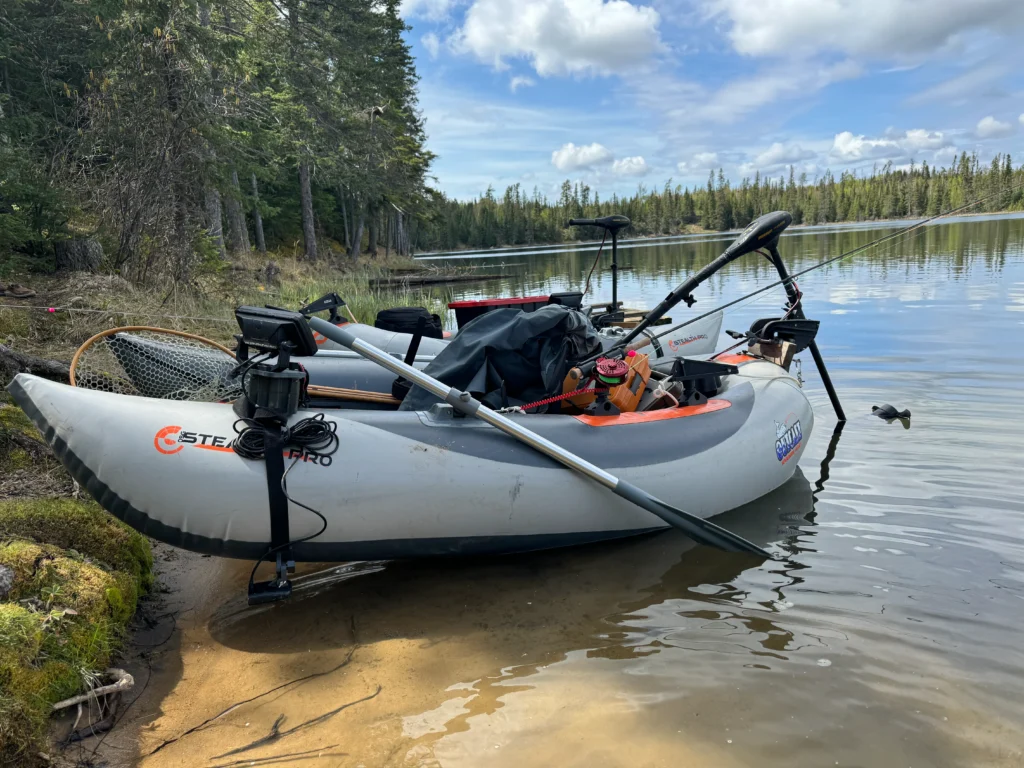
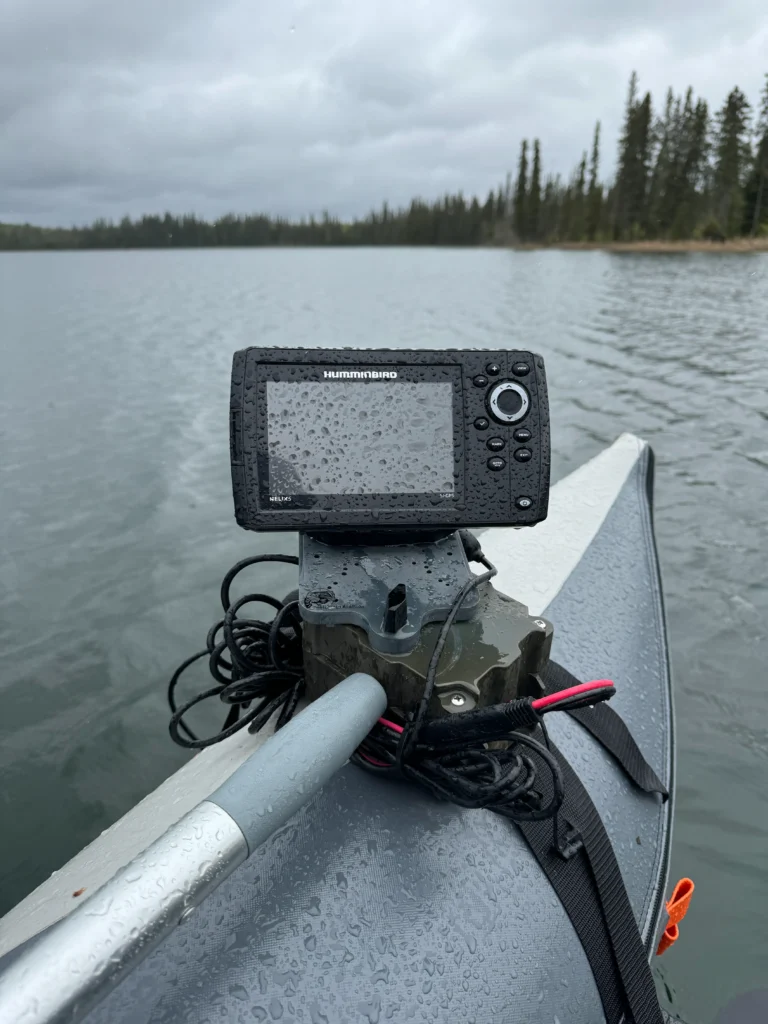
Phil also talks about how customizable pontoon boats have become. He’s seen anglers rig them with PVC camera mounts, sounders, GPS units, extra storage, and all kinds of creative setups.
When it comes to rivers, Chris says rowing skills matter just as much as the boat itself. As he puts it, “it’s not the sword, it’s the samurai.” He recommends practicing rowing before fishing in bigger moving water and always wearing a PFD.
Frameless Pontoon Boats and Custom Setups
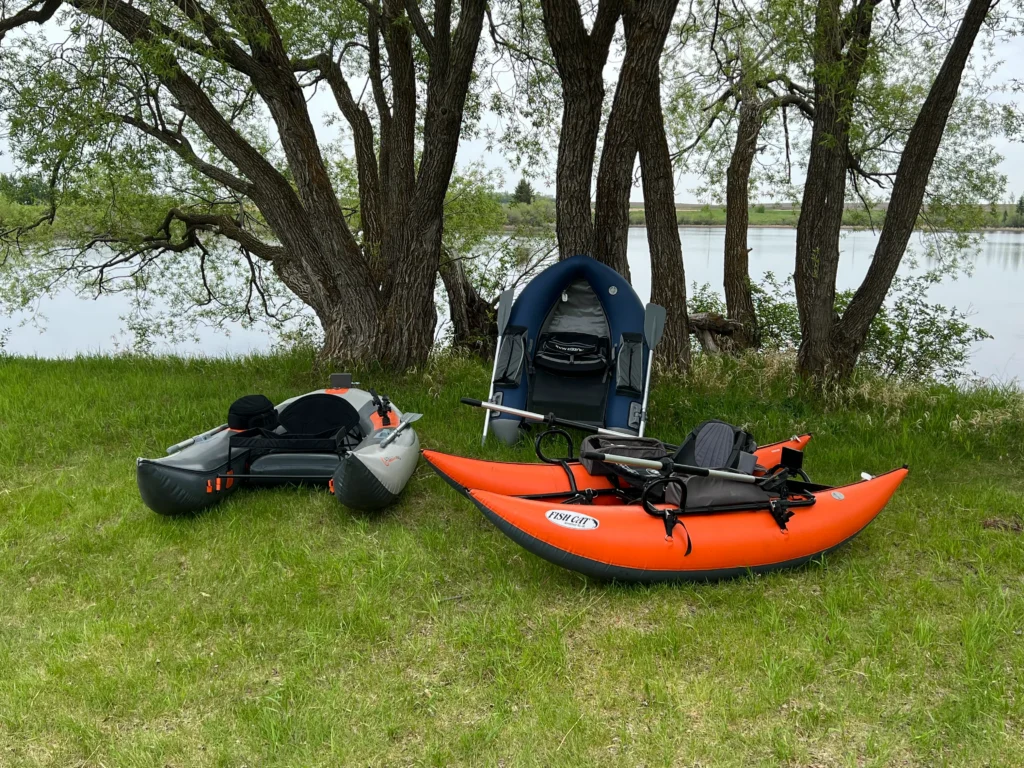
Phil and Chris get into the frameless pontoon boats like the Stealth Pro, Scout, and Commander. Chris says the Stealth Pro and Scout fish more like “big float tubes with oars,” while the Commander feels closer to a kayak.
A few things they highlight about the frameless boats:
- Lighter and easier to transport than framed pontoons
- Open bow design makes it easier to strip line, watch indicators, and land fish
- Oars fold down out of the way when fishing
- Still customizable with anchors, rod holders, pockets, and motor mounts
Chris says he personally likes the frameless boats because they keep things simple. No trolling motors. No fish finders. Just easy rowing and fishing.
Phil also talks about using drogues or drift socks to control the drift on lakes, especially during competition-style fishing.
Phil and Chris talk about how most anglers leave framed pontoon boats assembled once they’re set up.
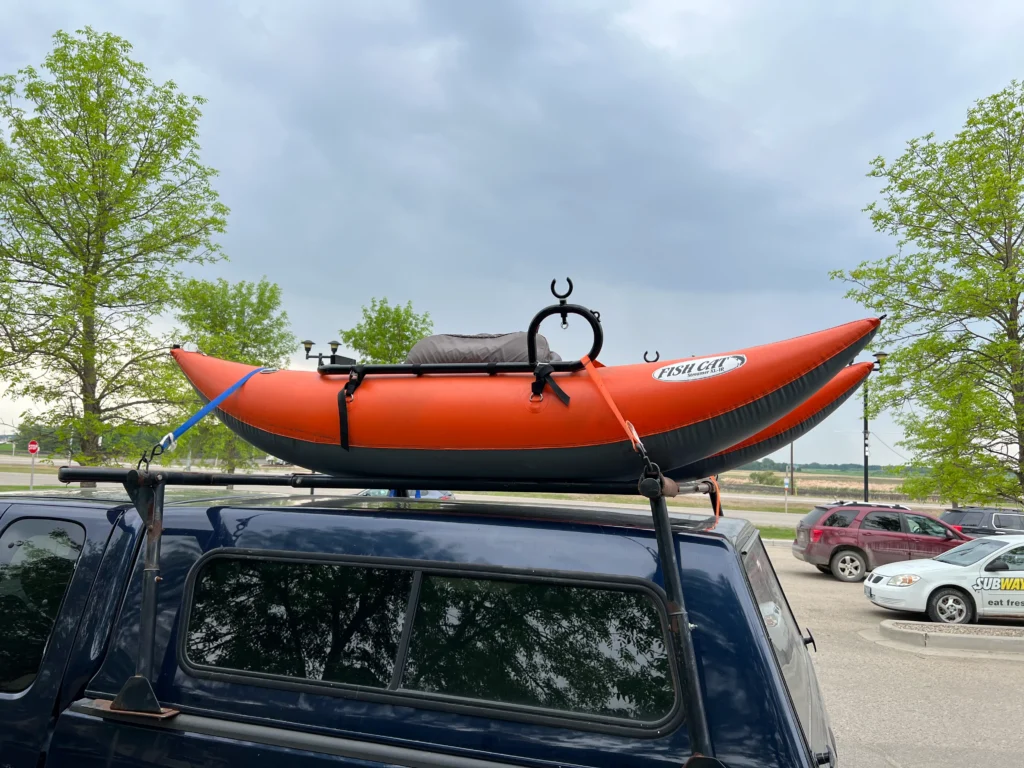
Chris says he likes keeping the frame on the roof rack and deflating the pontoons for travel instead of constantly adjusting for heat and elevation changes.
Phil says he usually leaves the pontoons attached, straps everything together, and slides the whole setup into the back of his truck.
Taking Care of Inflatable Watercraft for Lakes
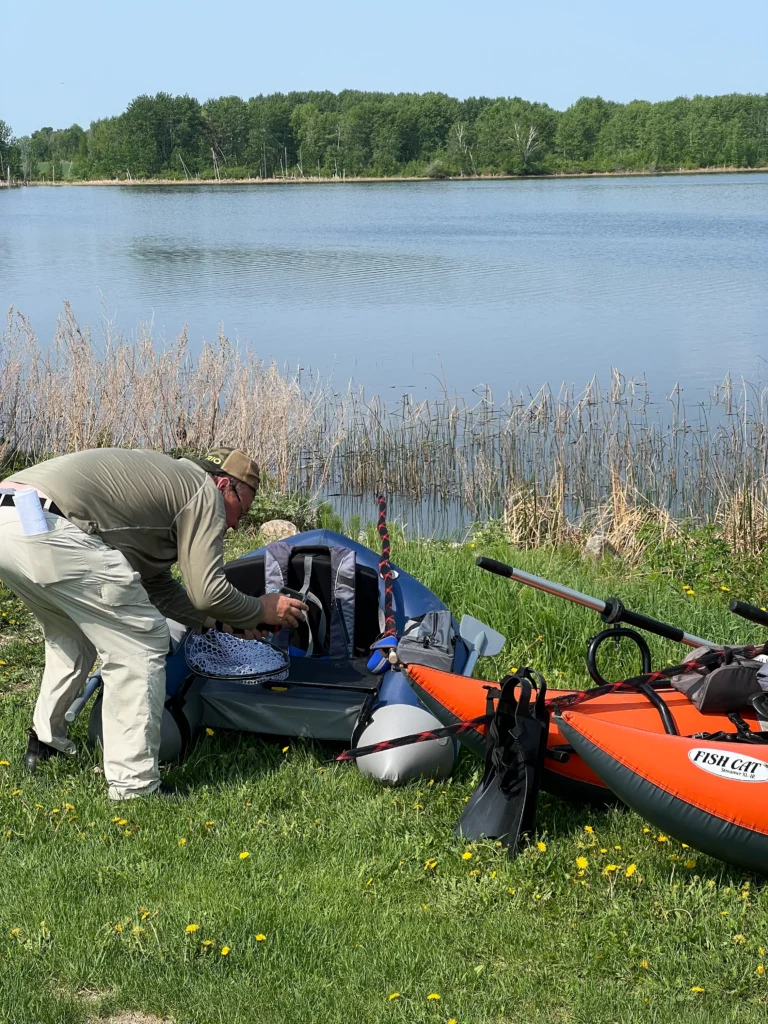
Chris says keeping inflatable boats in good shape is pretty simple:
- Let everything dry before storing it
- Wipe off dirt, goose poop, and fish slime
- Store boats in bins if possible because rodents love chewing on them
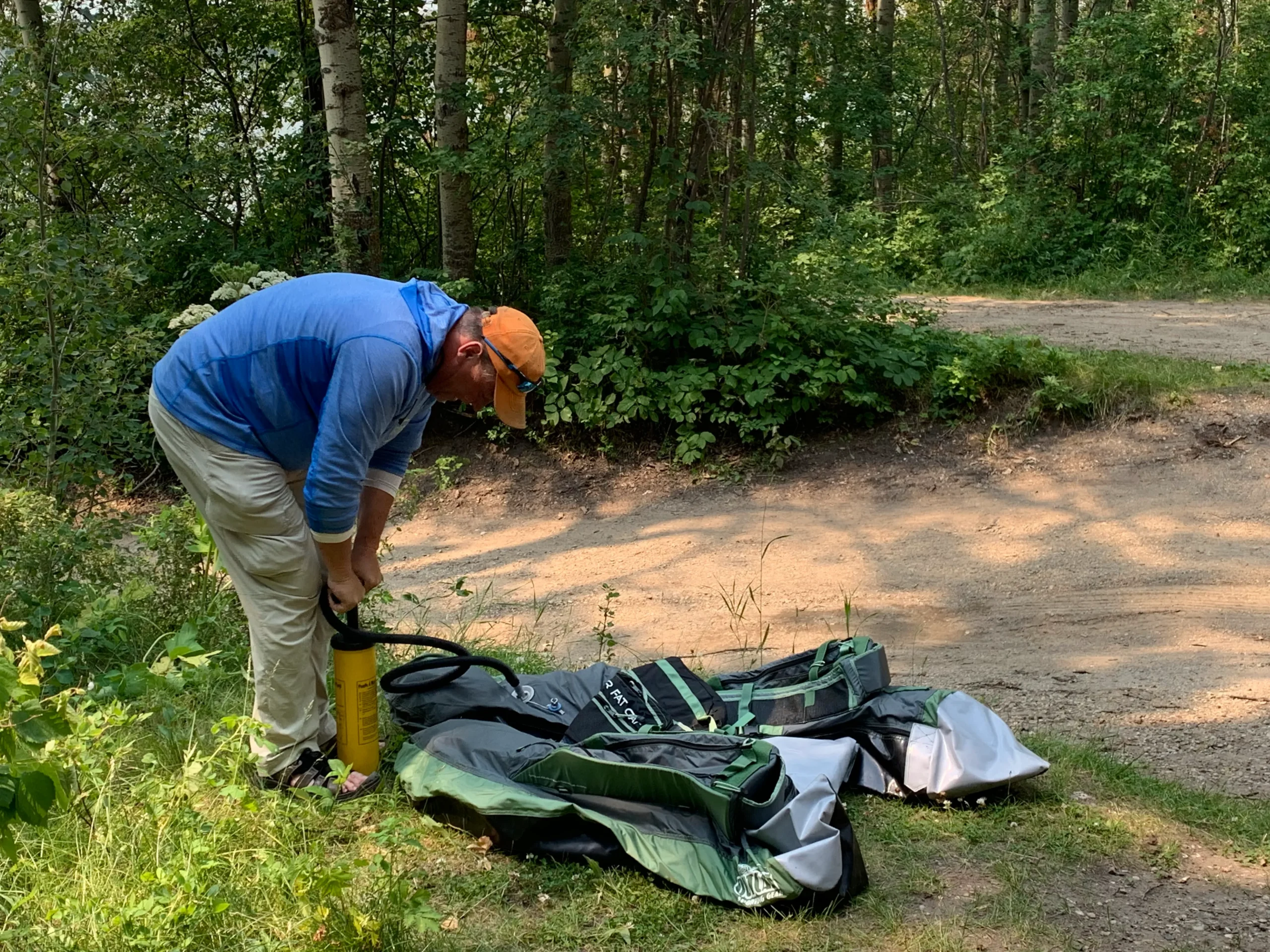
- Inflate the boat before your first trip each season to check for leaks
He also recommends sticking with basic soap and water for cleaning. No harsh chemicals and no zipper lube since it can attract dirt and debris.
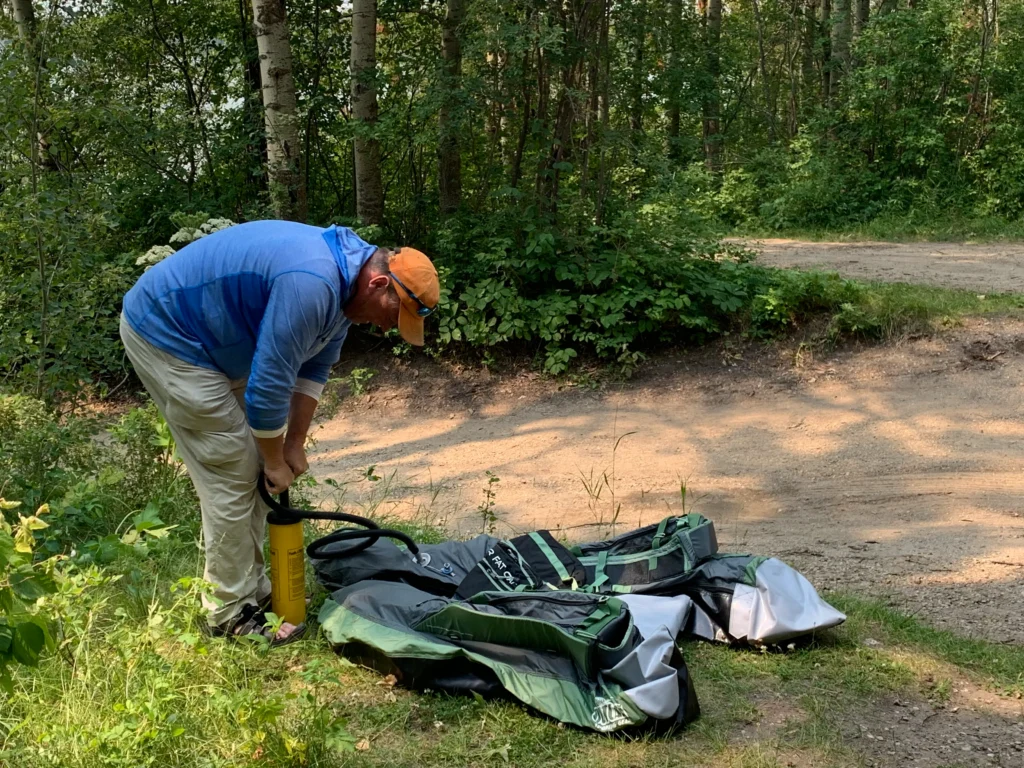
Phil says he usually lays all his boats out in the spring, pumps them up, gives them a wash, and checks that they’re still holding air before the season starts.
Anchoring Float Tubes and Pontoon Boats
(55:56) Phil and Chris talk about how important good anchoring systems are for lake fishing, especially when you want better boat control and cleaner presentations.
For framed pontoon boats, they mention using Scotty Anchor Lock systems along with Outcast pulley setups and rail mounts. Phil says he likes running two anchors on lakes, and the Scotty setup makes it easy to raise or lower anchors with one hand without losing control of the rope.
They also get into anchoring float tubes. Phil explains a simple rope-and-bungee setup he runs behind the seat so the tube stays straight downwind instead of pulling him sideways. Chris also mentions the Scotty strap-on anchor mount as another simple option for float tubes and frameless boats.
Choosing the Right Inflatable Watercraft for Lakes
Chris says the best advice he gives people is to buy the boat they’ll use 80% of the time because there’s no single boat that does everything.
For simple after-work lake fishing, he says a float tube is usually enough. For anglers mixing lakes and moving water, he likes frameless boats like the Stealth Pro or Scout. He also mentions the Clearwater for anglers who want more room and a raft-style feel.
They also briefly talk about the Stryker, a lightweight two-person raft-style boat that works well for lakes and rivers, especially for fishing with kids or family.
If you’re trying to figure out which setup fits your fishing style best, check out this video from Outcast on Choosing the best watercraft:
Pumps, Repairs, and Customer Support
Phil and Chris talk about different pump options for inflatable boats, from K-Pumps and foot pumps to battery-powered inflators like the Ryobi. Chris says he likes the K-Pump because it’s simple, durable, and doesn’t use hoses that always seem to break.
They also talk about how all Outcast valves work across different boats, which makes setup a lot easier.
Chris says the Ryobi inflator has become one of his favorites because it’s inexpensive, easy to charge, and works great for topping off boats before heading out on the water.
Learn More About Outcast Boats
If you want to dig deeper into inflatable watercraft for lakes, check out these resources:
- Outcast Sporting Gear Website
- Outcast Sporting Gear YouTube Channel
- Phil Rowley’s Outcast Playlist
- Phil Rowley Outcast Fishing Tips
Sponsors and Podcast Updates
Inflatable Watercraft for Lakes Videos Noted in the Show
How to Clean Your Outcast Float Tube or Pontoon Boat: https://www.youtube.com/@Outcastboats
How to Install an Electric Motor on a Pontoon Boat: https://www.youtube.com/@Outcastboats
How to Install a Second Anchor on a Pontoon Boat: https://www.youtube.com/@Outcastboats
How to Choose the Right Watercraft: https://youtu.be/IsbTos2uuD0?si=PNEr6f1XscLY7J8t
How to Safely Get in and Out of a Float Tube: https://youtu.be/IsbTos2uuD0?si=PNEr6f1XscLY7J8t
Related Podcast Episodes
Conclusion
Hopefully, this episode gives you a few ideas to make getting on the water a little easier. Phil and Chris covered a ton here, but more than anything, it’s just a fun conversation between two guys who really love fishing lakes and spending time outdoors.